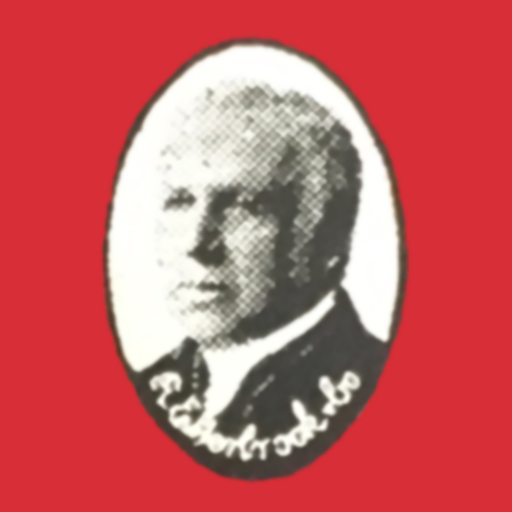
Taken from my two articles written for the Pennant, magazine for the Pen Collectors of America: 2023 issue 1, and 2023 issue 2.
Richard Esterbrook & Co. had a long and illustrious history, from its beginnings in the mid-19th century making steel pens, to their loyal fans even today. At one time, Esterbrook was the largest steel pen maker in the Western Hemisphere and one of the largest in the world. Because of its size, longevity, and market dominance, we find many tales written over the years about its origins. Some claims come from marketing materials, but also many other stories float about, some from descendants, some just invented.
In this page I will lay out what the actual records and other primary sources tell us. I’m sure there is much left to discover not covered in this article, especially if one could execute a detailed, local exploration of records in Cornwall, where the Esterbrook family originated, or Canada, where they emigrated before ultimately coming to the United States. Some elements of the popular stories may be true, even if there are, so far, no records to validate them, such as the extent of Richard (senior’s) investments in the Cornish tin mines, or that Richard Jr. tried making pens himself before they opened they factory in Camden.
The Very Many Richard Esterbrooks
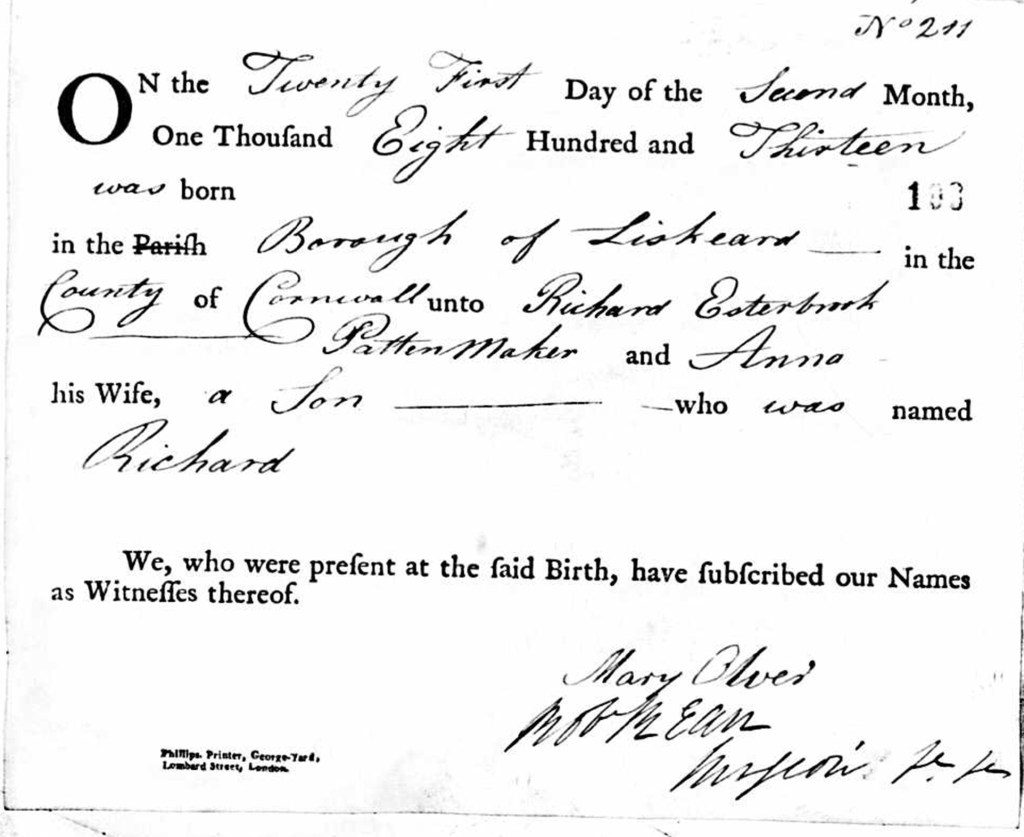
In 1780, John and Mary Esterbrook, living in the ancient town of Liskeard in Cornwall in the southwest of England, were blessed with the birth of a son. They named him Richard Esterbrook. Richard grew up to marry Anna Oliver and hold various jobs, including patten maker (a kind of shoe), baker, and confectioner. But this story is not about that Richard Esterbrook. It’s about his son Richard Esterbrook, and his son Richard Esterbrook, and his son Richard Esterbrook, but not really about his son Richard Esterbrook, let alone his nephew Richard Esterbrook McConnell.
Richard Esterbrook, first of his name, not only held the various jobs mentioned above, but he was also a devout member of the Society of Friends (Quakers) until his death in 1846. He is buried in the Society of Friends graveyard in Liskeard.
His son, the first Richard Esterbrook to take center stage in our story, was born on February 1, 1813, in Liskeard to the first Richard and his wife Anna. To facilitate the rest of the story, we shall call this Richard “Senior” as that is how he was known in the United States after he and his son, known as “Junior” founded the Esterbrook Steel Pen Manufacturing Company.
In the 1830 Directory of Cornwall, Liskeard is described thus, given with the spellings, capitalization, and punctuation of the original:
A Market and borough town, and parish, in the hundred of West, is 225 miles from London, 49 from Exeter, and 32 from Truro. The town is situated partly on rocky hills, and partly in a bottom; is one of considerable antiquity, and had a strong castle, where the dukes of Cornwall kept their court. Its ancient name was Lis Kerrett—derived, as is supposed, from two old Cornish words, signifying a fortified place…
The principle business of Liskeard is connected with the tin, lead and copper mines in the neighborhood; serges and blankets are manufactured in the town, to a small extent; there are also several tanneries and rope walks, and the wool trade is an improving branch… In the town are places of worship for the methodists and quakers, and some small schools, in which children are instructed gratuitously; also a grammer-school, supported mainly by the members for the borough. The town is supplied with water from an admirable spring; and the neighborhood furnishes examples of what are supposed to be druidical remains. The market-day is Saturday, and there are six fairs held annually, viz. February 18th, March 25th, Holy Thursday, August 15th, Oct. 2nd, and Dec. 9th. The number of inhabitants in the borough and parish of Liskeard, according to the last returns, was 3,519.
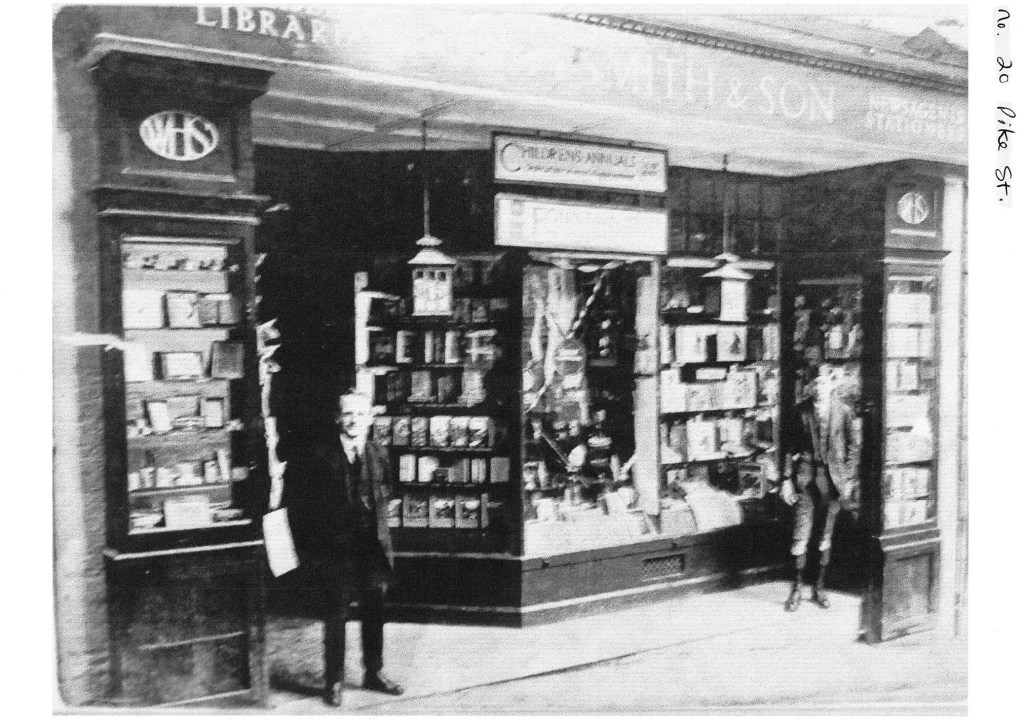
Richard Senior (the second of his name), married Mary Rachel Date, from another prominent Quaker family in the area, in 1836. By 1839, 26-year-old Richard and Mary were running a small bookstore, stationery, and printing shop in Liskeard on Pike Street. Richard is also listed in the 1839 directory as an agent of the Globe Insurance Company and his residence was listed as Pike Street, possibly above the shop or just down the street. The building is still there, though empty as of August 2022. It continued as a stationery shop for quite a while after Esterbrook moved out.
This is a photo of the shop 1910–20 when it was a branch of the famous stationer W. H. Smith and Son. Local accounts remember a stationer/bookshop in the location as late as the 1970s. And then what it looks like as of the last time Google Street View went by.

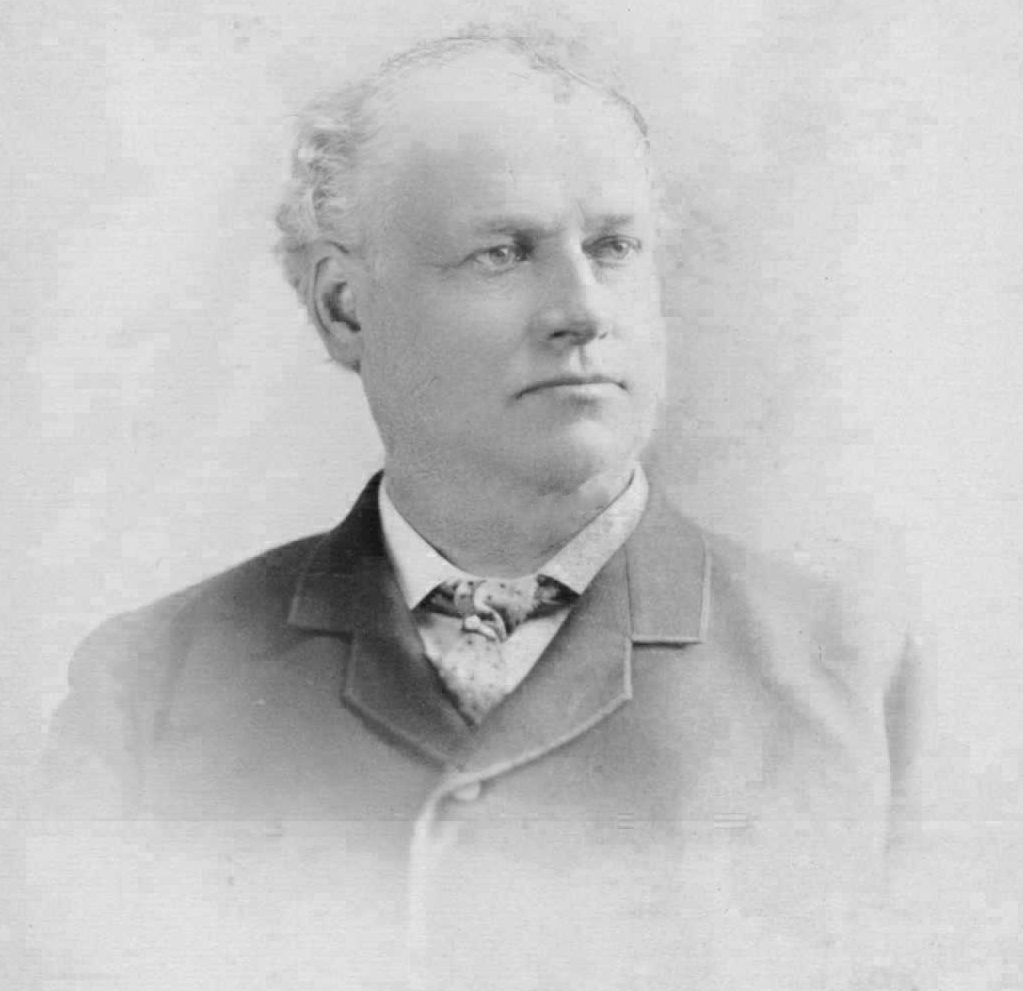
By 1839, Richard and Mary already had a small family. Continuing the family tradition, they named their first child Richard Esterbrook (figure 5); he was born in 1836, just over eight months after the marriage. Their daughter, Mary Anna (because they wanted both of their children named after their parents?), was born in 1838.
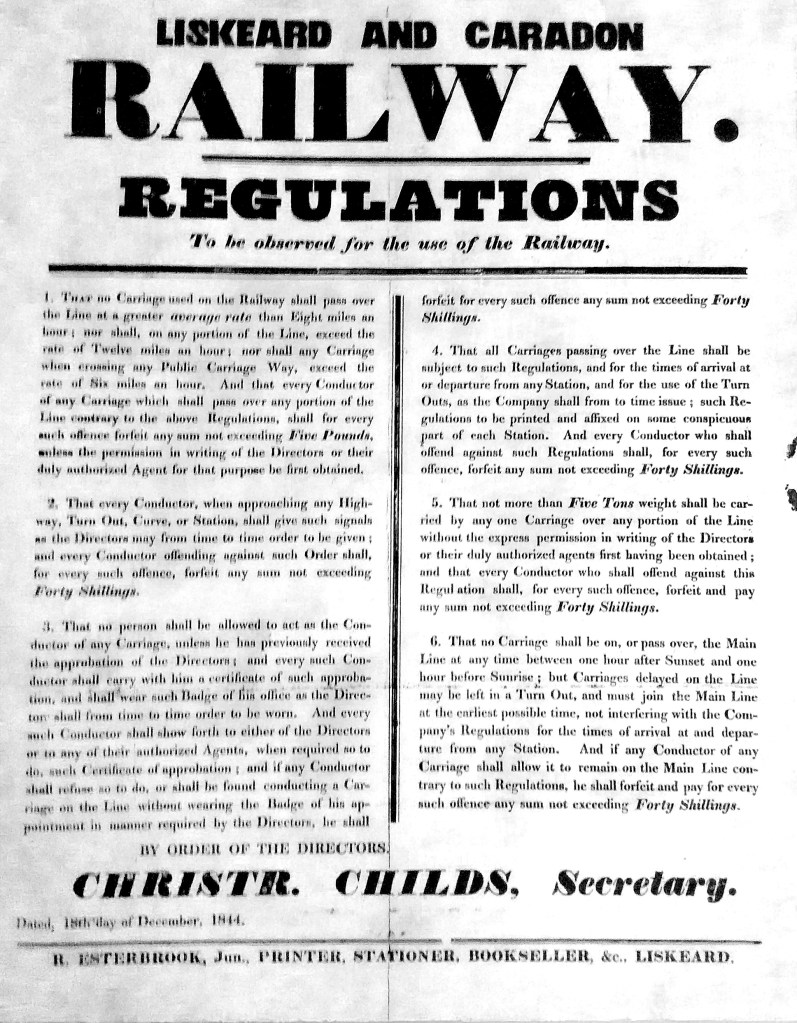
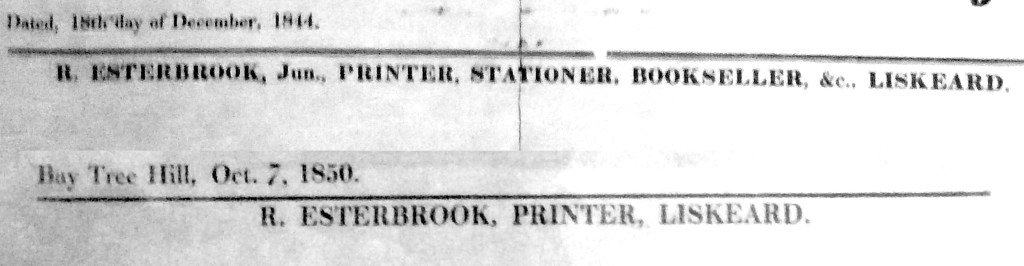
The family prospered, and in the 1851 census of England, we find 14-year-old Richard Jr. attending school in Falmouth, residing with the family of the school master, Squire Lovell. Richard Sr. is still running his shop in Liskeard. His printing business appears successful, and several examples of his work still survive in the Liskeard Museum.
By 1856, Richard Sr. is no longer listed in the directories in the section with other common shop keepers but is listed in the section titled “Gentry and Clergy” and is recorded as living in a set of neat row houses called Dean Terrace. His stationery business is still running, and he’s moved up the social strata. This may be because of his business success (either the stationery business, or the investments in the tin mines claimed by the family), or he may have been included in that section because he was by this point a senior minister in the Society of Friends.
Other accounts say that Richard Sr. made enough money to retire, though his shop seems to continue in operation at least until he left for North America. There is a deed at the Liskeard Museum showing he finally sold the shop in 1866, a momentous year for the Esterbrooks, when Richard Sr. seems to have decided that this pen business might be worth staying for after all. We will discuss this year in more detail later.
What about Richard Jr.? We know of his education in Falmouth. The next record we have is in the 1856 directory, we find 20-year-old Richard Jr. back in Liskeard and listed as “Manager of Gas Works.” What he was doing in between is unclear. One possible answer comes from a handwritten note on the 1866 deed where Senior sold his original stationery shop in Liskeard. The deed is in the collection at the Liskeard Museum, and according to correspondence with the museum, the note reads, “Richard junior was apprenticed to a well known pen and nib manufacturer and eventually emigrated to America and set up business on his own account…with great success…The firm he founded, still in existence, the Esterbrook Corporation, is a firm of international repute but particularly in the USA of the standing of the Parker Pen and Shaffer [sic] pen companies.” The references to Parker and Sheaffer indicate the note was added long after the events recounted, so the veracity of this bit of local lore may be questionable, but it does raise an interesting line of speculation should it prove to be true.
Regardless of any apprenticeship in Birmingham, Richard Jr.’s position of manager of the Gas Works did not seem to last long because within the next year or two he was gone from Liskeard and his departure signals a period of great change for the whole family.
The Esterbrooks in the New World
The period between 1856 and 1861 is missing some details, but there are a few facts we can piece together thanks to city directories, and the records of the various Friends societies in the area. There was a common practice of the Society of Friends to record when a member left one “meeting” (congregation) and wished to enter another. The original meeting would write a recommendation to the new meeting attesting that this person was a member in good standing and recommended acceptance.
Fortunately for us, many of the records for Canadian Quakers are digitized and available online— because what we do know is that sometime before 1858, Richard Jr. was in Canada. He was followed by his parents and sister by sometime in 1858, and the three lived in Toronto for a period of time. By 1859, though, they would all end up in Galt, a town about 70 miles west of Toronto.
One intriguing piece that may or may not belong to this puzzle is an entry in the 1857 edition of The Canada Directory. Under the section for Galt is a listing for “Esterbrook, Richard & Co, a dealer in hardware.” While there is no evidence, yet, to directly connect this to either of our Richard Esterbrooks, we can place both of them in that same small town by 1859. It’s not unreasonable to imagine Richard Jr. there by 1857. One other interesting thing to remember is that early categorizations of steel pens often placed them under “hardware.”
We know Richard Sr. moved to Galt in 1859, because we have the record of when the Toronto meeting of the Society of Friends wrote to the Norwich (Ontario) meeting to recommend Richard Sr., his wife Mary, and daughter Mary, stating that they were to move to Galt for a short time: “The residence of our Friends in your land is likely to be temporary only, but they request it. We send you a certificate agreeable to good order…”. This seems to point to 1858 as the likely year the three arrived in Canada: they must have been enrolled into that meeting long enough that the Toronto folks felt comfortable recommending them to Galt the very next year. In April of the same year, Richard Sr. wrote a request to his original Cornwall meeting in St. Austell finally asking for a permanent removal. They recommended him for a removal to Galt as well.
Early in 1859, the same year that Richard Sr. and family moved to Galt “for a short time,” Richard Jr. married for the first time. In April of 1859, The West Briton and Cornwall Advertiser listed an announcement for the marriage of Richard Esterbrook, formerly of Liskeard, to Gertrude Louise of New York. They were married in Brooklyn, but the marriage did not seem to last long. No record of their divorce has yet been found, but Gertrude Esterbrook continued using that name until her death, in Brooklyn, in 1908, and Richard Jr. went on to marry Jeanette Hardy in 1862.
All of this changed in 1861.
In 1861, the Esterbrooks prepared to leave Canada for Camden, New Jersey. Richard Jr. submitted a request to the same Norwich (Ontario) meeting to leave the Society of Friends for good. The request was eventually granted. Also in 1861, Richard Sr., along with his wife and daughter, were granted certificates of removal recommending them to their new congregation in the Friends Meeting of Haddonfield, New Jersey, one of the oldest Quaker communities in the United States. Haddonfield was also the nearest meeting to Camden, New Jersey.
The Company
In many histories of the Esterbrook company, 1858 is given as the official date for the founding of R. Esterbrook & Co., but it is not clear what exactly this is referencing. Some stories have Junior trying to make pens in Philadelphia, some mention Canada. Could this have been, perhaps, the “hardware” mentioned in Galt?
Some stories hold that Junior attempted to make pens but was unsuccessful and convinced his father to come to the United States and help him start a new company. I’ve also run across a story that Junior tried making pens in Canada first, and his father suggested Philadelphia as a better location because of its already extensive steel and manufacturing base. If true, I’m sure the strong Quaker community there was at least a bonus if not a major factor in choosing Philadelphia.
Regardless of where the 1858 date came from, by 1860 Senior and Junior were putting together a company with offices in Philadelphia, and, by 1861, they opened their factory in Camden, New Jersey, in the old water works. In a certificate announcing the re-formation of the company in 1866, which we’ll discuss in the next article, it mentions: “The business of Steel-Pen Manufacturing was commenced by them [Senior and Junior] in this country [USA] in the year 1860, the United States being almost wholly supplied to that time with Pens of foreign manufacture.”
 ©The Esterbrook Project