Where I define some terms used in The Esterbrook Project.
Finishes
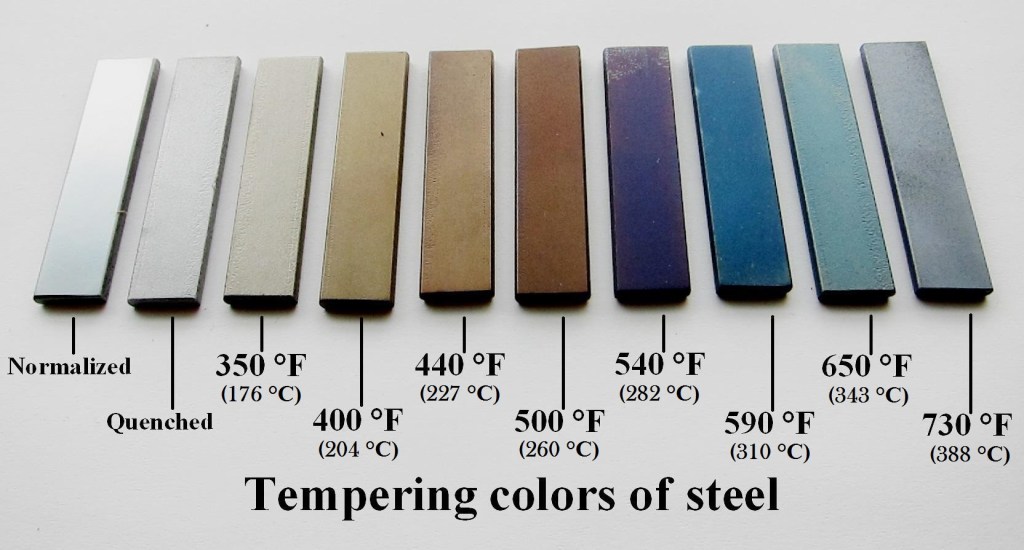
Steel pens came in a wide variety of colors. Most of them were from reheating the metal in one of the last steps in their manufacture, but others come from a plating or other coating over the bare steel.
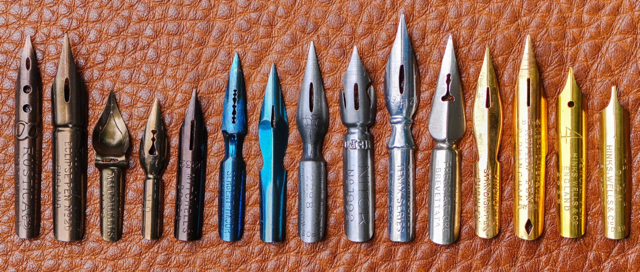
These are the standard terms Esterbrook used to describe the colors available for their pens.
Black: Sometimes called Tar-coated. This was a finish using a tar-like coating that supposedly protected the pen from rust.
Blue: A heat-based color. Esterbrook did not make many pens with this finish. The small mapping and drafting pens are the main exception.
Bronze: The main color of pens from the early years, and the primary finish for British pens. The finish can cover a fairly wide range of hues from dark, almost purplish to a light tan. Very light bronze can often be impossible to distinguish from “Fawn” but fortunately “Fawn” was a rare finish even when it was produced. Some very old, and very light, bronze may well have been intended to be “Fawn” but it’s impossible to know now.
Copper: This was a plating finish. Copper, I’m assuming, was intended to be corrosion resistant, but seems to have not worked very well. I’ve only seen a few copper finished pens, and they’ve all had some kind of corrosion on them, and the copper finish was rather thin.
Fawn: This finish was another heat-based finish. I’m not sure exactly how to distinguish it from a very light bronze, even in the few examples that are explicitly marked as “Fawn,” like on salesman sample cards. This was not a common finish, and few pens were offered in it, and it soon disappeared from the catalogs.
Gold: This is the term used to mean gold-plated. Any pen could be gold-plated by special order, but some were offered in a gold-plated version in the catalogs. These generally cost about twice what you would pay for an uncoated pen.
Golden: This is the term they used for a brass pen, like the Colorado series, or the #314 Relief.
Gray: Most of the time this is the term used for a plain steel pen. Some early catalog entries use it to describe what they call an Amalgam pen. Amalgam is an early term often used to make a claim for a better alloy than a plain steel pen, but I’ve yet to find any evidence that an Amalgam pen is anything but a steel pen with an extra coating of marketing.
Half-Gold: These are pens where one part of the pen, usually the body, is gold-plated, but the rest, usually the heel, is left plain.
Nickel: Nickel-plated pens were often also called “White.” These pens tend to have a silvery look that can sometimes be difficult to tell from a polished steel pen. Again, it was a coating that was supposed to preserve the pen from rusting, but seemed to not have a huge impact.
Purple: A very rare heat-based finish. This may be difficult to distinguish from a very dark Bronze. As you can see from the tempering color chart above, purple is just on the other side of Bronze, and some pens seem to have an in-between color. This is probably the rarest of the Esterbrook colors, and I’ve yet to see one.
Silver: This is a plated finish and usually is created using an alloy of silver, nickel and perhaps other metals. There were several attempts at silver finishes, until Esterbrook finally “perfected” it with their line of Radio pens which have a silver finish that actually does seem to offer some level of protection.
White: Another term for “Nickel-plated.” (see “Nickel” above)
Shapes
Taken from The Steel Pen’s Proposed Glossary of Steel Pen Shapes with permission from the author (myself).
Naming Shapes
Steel pens come in many different shapes. There is no single source for “official” names for the various shapes. Some names are explicitly given by manufacturers and seem to be standard, like the Falcon and the Shoulder pen, but most are not explicit and almost none are consistent.
American pens also tended to come in fewer shapes than you find in Europe. Even that limited range of shapes was narrowed down by the turn of the century. After WWI, during which manufacturers were required to reduce their product lines to only a few pens, even fewer different shapes were brought back after the war. By the 1920’s the number of pen shapes generally made in the United States was greatly reduced.
As I have cataloged my collection of pens, I have gathered together a list of shapes and descriptions that are useful to me. The names come from either standard names used in the industry (many from Esterbrook), my attempt at a descriptive name, or it is named after a standard pen that seem to exemplify this shape, such as the Inflexible or the Colorado.
These tend to be rather broad categories. Many of these shapes have various sub-types under them. The most common shape, the Straight pen, can be found in variations such as the wide and shallow, the long and thin, the short and delicate, and others. Pinched Spoon pens, as well, tend to have quite a range of shapes to the pinched transition section between heel and body. Some are smooth, others faceted or decorated in one way or another, but all share the same, basic shape.
Other shapes are differentiated by degrees of one characteristic or another. The three stubs, short, medium and long, merely designate the three general sizes of straight-boded stub pens. These three designations work because manufacturers tended to make all of their straight-bodied stubs in one of these three sizes. Beaked pens and Bank pens are pretty closely related and only differ in the ratio of tines to body.
This is neither an exhaustive nor authoritative list, but one that I’ve put together to try and give names to the shapes of my pens. I’m sure as I progress in my detailed cataloging I will add to, or tweak this list. As flawed as it is, right now this is the best (and only) list I’ve found out there that tries to describe and standardize the main shapes of steel pens.
I’m sure that some disagree with some of my names and even my categorization. I’m also sure I’ll find examples that either don’t fit or are in between one or another shapes. That’s OK. This is a work in progress and I will be adding to, and modifying this list as I go along. It’s also far too limited for the wildly divergent shapes you find in England, France, Italy and German manufacturers. But we are dealing with Esterbrook here, and all of Esterbrook’s shapes fall into one of these categories.
If you find a shape that is specifically mentioned in a source and I call it something else, let me know and share the source. I may incorporate it or even revise my name.
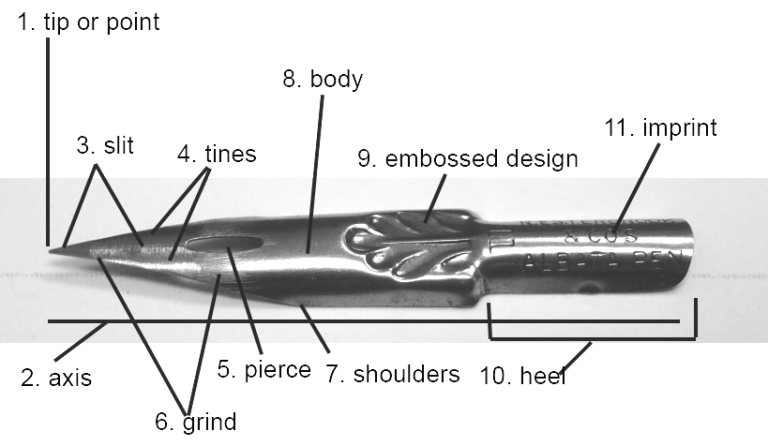
Pen Anatomy
To ensure we’re all using the same term for the same part of the pen.
Shapes
Albata
Normal heel, large, embossed design, generally floral, leading to a long, tapering body.


Bank
A long, straight pen with longer tines than normal, but not as long as a Beaked pen. Though the Bank pen is sometimes classified as a Beaked pen, I think there’s enough of a difference between the very common “Bank” pen shape and the longer tines of the rest of the beaked pens that I call out the Bank as a separate shape.

Barrel
Pen where the heel is a complete tube and the body of the pen is shaped as normal. The body can come in various forms. Many of the earliest steel pens were barrel pens, often permanently fastened to a holder. (pre-industrialization)

Beaked
Generally a straight bodied pen with extra-long tines. Tines are much longer in relation to the body than even Bank pens.


Colorado
Similar to a taper shape, but very shoulder-heavy, and a flat profile, as seen on the various Colorado pens from Esterbrook and others.


Crow Quill
Same shape as a Barrel Pen but much smaller, thinner and a much finer point.

Crown
Normal heel that transitions into a series of strips connecting the heel to the body of the pen. These strips are bent outwards in a rounded shape to make a sort of basket that resembles a crown.


Double Elastic
A straight-bodied pen with notches cut out of the edges just below the shoulders.

Double Line
A pen that draws two lines simultaneously. There are two sets of tines. Most examples separate the two tine equally distant from the center, but there are examples where one line is thicker than the other or offset from the center more than the other.
There are also multi-line pens, like the ones used to draw musical staves. These are relatively rare, and more for drawing than writing.

Double Spring
A straight-bodied pen with a cut-out across the body of the pen perpendicular to the line of the pen.

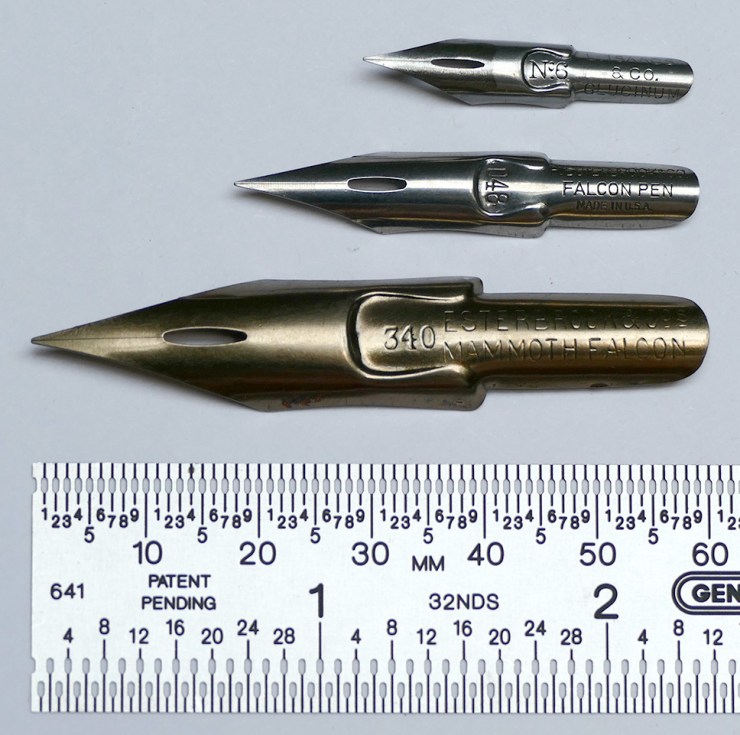
Falcon
Normal heel, then flared transition with embossed “shoulders” “cut-out” sides moving up to a shoulder and taper to longer tines.
Falcon Stub
A stub pen in the shape of a Falcon pen. There is often a noticeable flair at the shoulders due to a slight pinching of the body in the middle. This shape was invented by Leon Isaacs & Co. before Esterbrook came out with their version, the 442 Jackson Stub. Isaacs had actually trademarked the terms “Falcon Stub” and “Stub Falcon” so Esterbrook referred to the 442 only as “stub” or “Jackson Stub” pen until 1900 when Leon Isaacs was sold to Turner & Harrison.

Flat Leaf
Leaf-shaped pen but the body of the pen is flattened rather than rounded. There may or may not be a transition section between heel and body. Probably the best known pen of this shape is the Waverley Pen by Macniven and Cameron.

Flat Spear
Similar to a spear, but the top of the body is flattened and sometimes curved.

Falcon
Normal heel, then flared transition with embossed “shoulders,” “cut-out” sides moving up to a shoulder and taper to longer tines.
Falcon Stub
A stub pen in the shape of a Falcon pen. Often there is a more pronounced curve to the middle of the body that results in a flair at the
Flat Leaf
Leaf-shaped pen but the body of the pen is flattened rather than rounded. There may or may not be a transition section between heel and body. Probably the best known pen of this shape is the Waverley Pen by Macniven and Cameron.
Flat Spear
Similar to a spear, but the top of the body is flattened and sometimes curved.
Index
Shaped like a pointing index finger.

Inflexible
Related to a pinched spoon, but with a distinctive sharp dip and ridge as seen in the Esterbrook Inflexible pen, and others.


Leaf
Similar to a spoon, but the body is bottom heavy with a deep curve at the bottom but quickly narrowing at the top. The body has a rounded profile.

Long stub
A longer , straight-bodied stub.

Medium Stub
A medium-length straight stub.

Oblique Pens
Oblique pens different from regular pens in that they move the angle of writing away from the angle of the pen. There are at least four different ways of accomplishing this with the pen nib alone. You can also use a special oblique holder that holds a normal pen at this oblique angle.
Oblique, Elbow
An oblique pen shaped like a straight-sided pen that has been bent into an oblique, zig-zag shape.

Oblique, Mordant
An oblique pen in the general shape of the original Mordant patent. The body is broad and generally leaf-shaped with a generous swell near the heel and tapering to a point quickly.


Oblique, Spear
Similar to a Mordant or Elbow Oblique in that the body of the pen is bent towards the oblique angle. But unlike the other two, a separate body shape begins after the bend.

Oblique Tip
Similar to the other oblique pens, the purpose of this pen shape is to point the tips toward the right degree of slant even if the hand is pointed to a steeper angle. Unlike the other two forms of Oblique pen, this only points the tips, rather than the body of the pen.


Examples of the four types of Oblique Pen

Pinched Center
A normal heel, then the beginning of the body is pinched in and down to make a center ridge that extends up to the main body, which is generally smaller and then tapered or rounded towards the tip.


Pinched Spoon
A spoon pen with a transition section between the heel and the body of the pen. This transition can be smooth, faceted or even decorated.

Round
Normal heel, usually long, round body with small, triangular point sticking out

Ruling Pen
Folded sheet of steel or brass to create a v-shaped profile.

School
A straight-bodied pen with a small raised line perpendicular to the line of the pen, generally right above the imprint and before the pierce. Almost all of these shape pens are called “School” pens. The Gillott 404 is one of the most famous.

Shield
Normal heel, often there’s a transition section, then a slight, straight widening that ends in a wider shoulder. The key is that the widening from transition to shoulder is straight, not curved.


Short stub
Stub pen with a shorter, straight body

Shoulder
Normal heel then an abrupt, sharp, 90 or near-90-degree transition to create a wider, deeper, straight body to the shoulders. These are usually long pens.

Spear
Normal heel, very narrow and long body coming to a sharp point with no shoulders. There may be a transition section between heel and body, but it stays within a narrow profile.

Spoon
Wide at the bottom of the body, gentle and smooth narrowing to the tip. Abrupt transition from heel to widest part of the body.

Straight
Straight sides and even width along the length from heel to shoulders.

Taper
Straight-sided pen narrow at the heel and wide at the shoulders. The taper is straight from heel to shoulder.

Tips
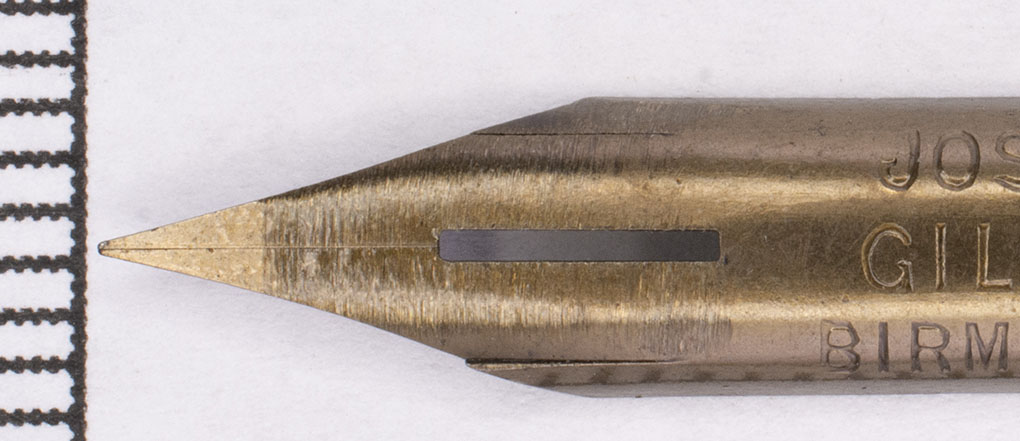
There are really just four main types of tips you find on steel pens: pointed, turned-up, oval/ball, and stub/italic.
Pointed
This is the standard tip on most pens. These can be super fine on pens like crow quills, extra-fine, fine or even medium. Once past this, the tips become a stub or italic.
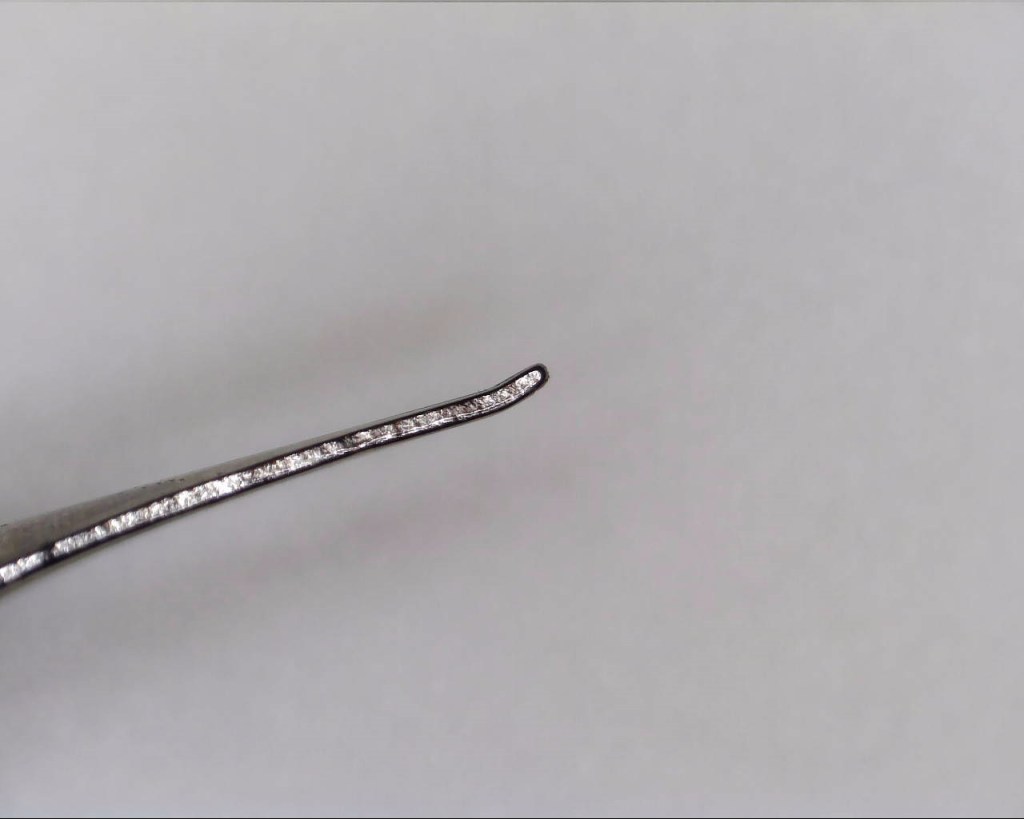
Turned-up
The turned-up tip was the first attempt at making a smoother writing experience for more rapid writing. The tip is merely bent at a slight angle at the very tip so that you are writing with the (relatively) broad surface of the bend rather than the very sharp tip. This results in a slightly smoother write, but it also makes the line wider, so most of these pens are medium, at best.

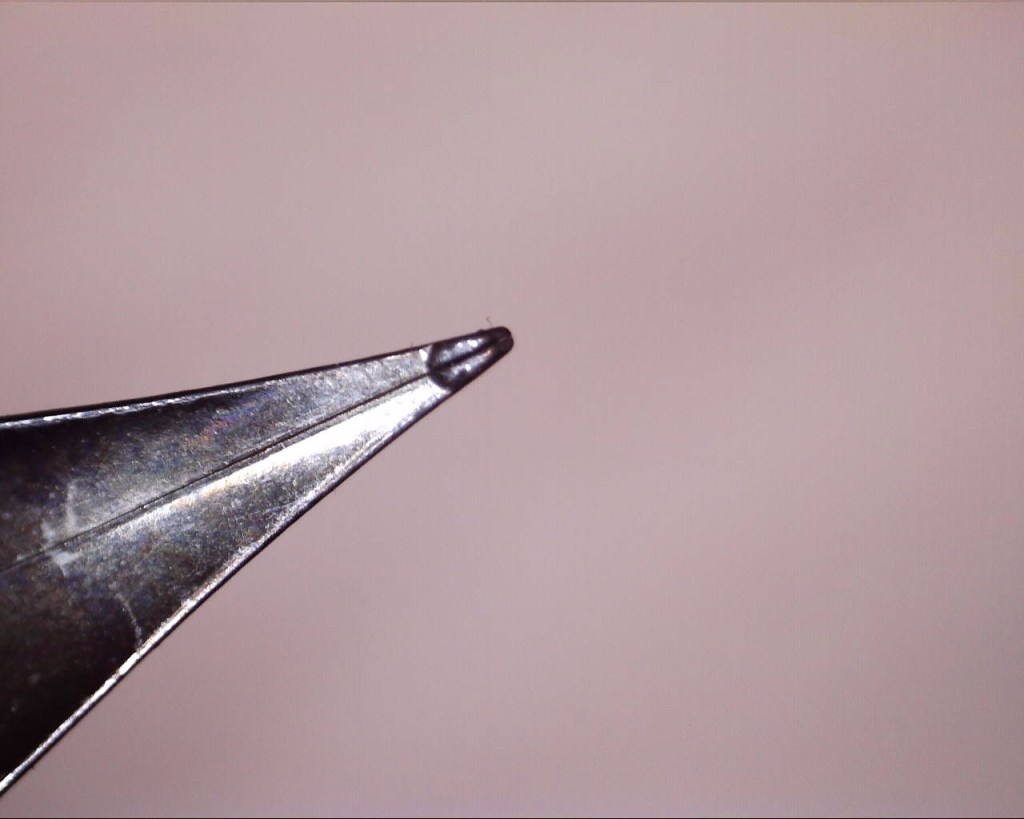
Oval point/Ball point/Bowl point
In this type of tip, a very small indent is made at the very tip of the pen. This results in a round and smoother surface where the pen meets the paper. This helps to make for a smoother writing experience, and does help with more rapid writing, though you cannot achieve fine or extra-fine line width.
Different manufacturers called it different things, mainly for marketing purposes, but it’s essentially the same thing, whether round or oval, you end up writing with a round surface hitting the paper rather than a sharp point.
This ball point was first patented in 1883 (patent 429) by the prolific pen inventor Hezekiah Hewitt, who was working at the time in Birmingham for Leonardt & Co. but later formed his own company. According to People, Pens & Production by Brian Jones, “Although the [ball point] pens had been slow to catch on at home, [UK] they were universally used in Germany and Austria under the Eureka label.”


 ©The Esterbrook Project